
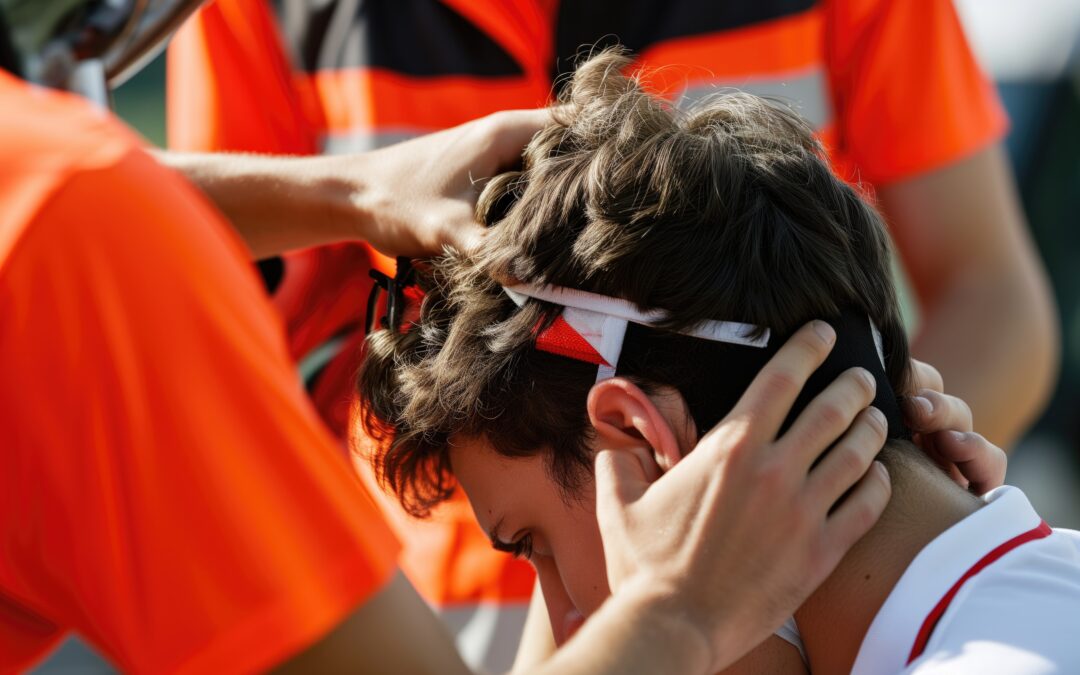
Fall sports are ramping up across the Upstate, with soccer, football, and volleyball teams already back on the practice field ahead of their first games. Along with the usual sprains and sore muscles that come with a new season, this stretch of the year is also when we start seeing more fall sports concussions come through our doors. Contact and collision are simply a bigger part of these sports, and head injuries deserve a different level of attention than a rolled ankle.
At Carolina Orthopaedic & Neurosurgical Associates, our orthopedic and neurosurgical teams work side by side, which matters most when an injury involves both a joint and a head. Knowing what to watch for, and what to do in the moment, can make a real difference in how quickly and safely your athlete recovers.
What Is a Concussion?
A concussion is a brain injury caused by a hit to the head or body that causes the head and brain to move quickly back and forth. This sudden movement can cause chemical changes in the brain and, sometimes, stretching or damage to brain cells. A concussion doesn’t require a loss of consciousness. Most athletes with a concussion never black out, which is part of why concussions can be easy to miss in the moment.
Because a concussion is an injury you can’t see on the outside, it’s often the symptoms and how an athlete is acting that give the clearest clues something is wrong.
Signs and Symptoms to Watch For
Concussion symptoms can show up right away or develop over the following hours. Common signs include:
- Headache or a feeling of pressure in the head
- Confusion, or trouble remembering the play, the score, or recent events
- Dizziness, balance problems, or feeling “foggy”
- Sensitivity to light or noise
- Nausea or vomiting
- Slowed reaction time or unusual clumsiness
- Changes in mood, such as irritability or unusual sadness
- Trouble sleeping, or sleeping much more or less than usual
Younger athletes may not always be able to describe how they feel. Coaches and parents are often the ones who notice a change in behavior, mood, or coordination before the athlete says anything at all.
What to Do If You Suspect a Concussion
If your athlete takes a hit and shows any of these signs, the safest next step is to remove them from play right away. Research suggests that continuing to play with a concussion, or returning too soon, can slow recovery and raise the risk of a more serious injury. The saying used by many athletic trainers is simple: “When in doubt, sit them out.”
From there:
- Have your athlete evaluated by a medical provider as soon as possible, ideally the same day.
- Watch for worsening symptoms, such as repeated vomiting, worsening headache, or increasing confusion, and seek emergency care right away if these occur.
- Follow a gradual, provider-guided return-to-play plan rather than a set number of days. Recovery time is different for every athlete.
Why Ortho and Neuro Care Working Together Matters
Head injuries in fall sports rarely happen in isolation, whether they occur at practice or in a game. An athlete who takes a hard hit to the head during a tackle or a collision may also have a strained neck, a jammed shoulder, or a sprained wrist from bracing a fall. Coordinating orthopedic and neurological care under one team can help make sure nothing gets missed, and that your athlete’s full recovery plan, not just the head injury, is addressed from the start.
This kind of coordinated care can also simplify things for families. Instead of juggling separate providers for a joint injury and a head injury, one care team can look at the whole picture and help guide a safe, complete return to sport.
When to See a Provider
Most concussions improve with rest and time, but it’s a good idea to have your athlete evaluated any time there’s a hit to the head, even if symptoms seem mild. Seek care right away if you notice:
- Loss of consciousness, even briefly
- Repeated vomiting or worsening headache
- Increasing confusion, slurred speech, or unusual drowsiness
- Seizures or convulsions
- Symptoms that are getting worse rather than better
When symptoms are less severe, a same-week evaluation is still worthwhile to confirm a safe path back to practice and games.
Supporting a Safe Season
Fall sports should be something your athlete gets to enjoy all season long, and a head injury during practice or a game doesn’t have to sideline them for good. If your young athlete has a suspected concussion or another injury as fall sports get underway, our orthopedic and neurosurgical providers work together to guide a safe recovery from day one. Schedule an evaluation with our team in Spartanburg, Duncan, or Greenville.